Why Turkish Lifters Build Everything on Compound Movements — And Why American Gyms Are Finally Catching On
Walk into a commercial gym in the US on any given Tuesday and you'll see it: a line of guys rotating through cable flyes, preacher curls, leg extensions, and lateral raise machines — each one targeting a single muscle in near-perfect isolation. It looks productive. It feels productive. And for a lot of lifters, it's been the standard for so long that questioning it feels almost radical.
But Turkish strength coaches have been questioning it for decades. And the results — measured in competition longevity, structural balance, and the kind of physiques that hold up over a full career — are hard to argue with.
The Foundation Comes First, Always
The Turkish approach to resistance training isn't complicated, but it does require a shift in how you think about building a body. Instead of starting with muscles and working backward to find exercises that target them, Turkish coaches start with movements — and let the muscles follow.
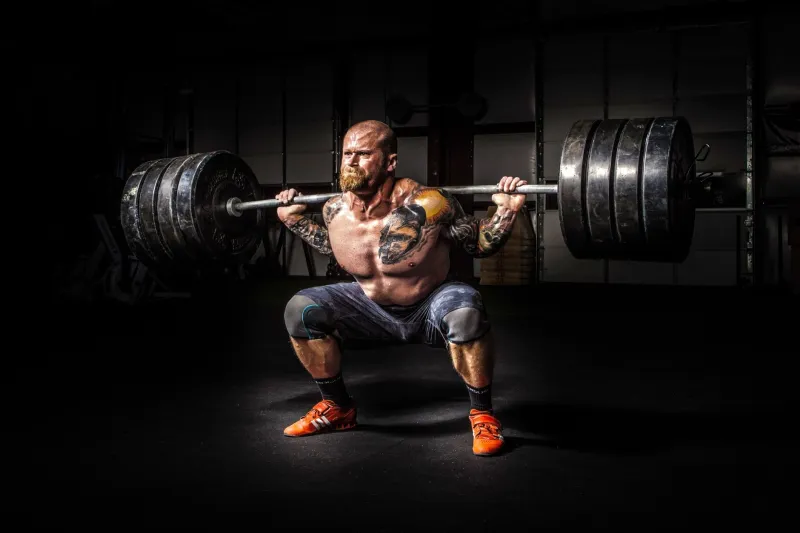
Squats, deadlifts, overhead presses, rows, dips, pull-ups. These are the pillars. Not supplements to the real work, not warmups for the cable station — the actual core of the program. Everything else gets layered on top after the foundational work is done, and only if there's energy and time left to do it properly.
The reasoning is straightforward: compound movements recruit more total muscle fiber, demand greater coordination between joints and muscle groups, and generate the kind of systemic hormonal response that isolation exercises simply can't match. When you squat heavy, your body doesn't just build quads — it builds everything that squatting requires. That includes stabilizers, connective tissue, and the neurological pathways that make you a more capable athlete.
Turkish coaches call this building from the inside out. American programs, in their view, often build from the outside in — chasing the mirror instead of the foundation.
Isolation Culture and the Injury Problem
Here's something Turkish strength coaches have observed consistently: athletes who train primarily on isolation exercises tend to develop uneven structural strength. The targeted muscles grow, but the supporting cast — the smaller stabilizers, the connective tissue around the joints, the postural muscles — gets left behind. That imbalance is a ticking clock.
You see it in American gyms regularly. A guy with impressive arms and a defined chest who throws his lower back out doing a Romanian deadlift because he's never actually loaded his posterior chain under real stress. Or a lifter with great quad development who's constantly nursing knee issues because the surrounding musculature never learned to work together.
Turkish training philosophy treats injury prevention not as a separate category — a thing you do on your off day with resistance bands — but as something baked directly into the program structure. When your training is built around movements that force the whole body to cooperate, you're developing resilience as a byproduct of every session.
This is one reason Turkish competitors tend to stay competitive longer. Their bodies aren't just visually developed — they're structurally sound in a way that holds up over years of heavy training.
What Compound-First Actually Looks Like
A typical session under a Turkish coaching model doesn't look like the chest-and-tri split most American lifters grew up reading about in fitness magazines. It looks more like this:
You walk in and you squat. Or you deadlift. Or you press overhead. One big movement gets the majority of your energy — trained heavy, trained with intention, tracked over time for progressive overload. That's the anchor.
From there, you add complementary compound work. A squat day might include Romanian deadlifts and weighted lunges. A press day might include dips and barbell rows. The goal is always to reinforce the primary movement pattern while adding volume to the muscles that support it.
Isolation work isn't banned — it just earns its place at the end of the session, as a finishing tool rather than a centerpiece. A few sets of curls after your rows, some lateral raises after your press work. Useful, but never the main event.
The result is a training session that feels different. Harder in a full-body way. More demanding metabolically. And honestly, more satisfying — because you've done real work before you ever touched an isolation machine.
The Physique Argument
Some American lifters push back here with what seems like a reasonable objection: don't isolation exercises produce better muscle detail? Don't you need to hit a muscle from multiple angles to fully develop it?
Turkish coaches don't entirely disagree — but they reframe the question. Detail and separation matter at the competitive level, yes. But you can't isolate your way to a foundation. You have to build the mass first, and compound movements are simply more efficient at doing that. A lifter who spends years squatting and pressing heavy will have more raw material to work with when it's time to refine.
There's also a proportion argument. Compound-first training tends to produce more balanced physiques because it forces the whole body to develop together. The lifter who squats seriously doesn't just have big quads — he has the glutes, hamstrings, and lower back to match. That kind of proportion, the kind that Turkish competitors are increasingly known for on American stages, is hard to manufacture with isolation work alone.
Bringing It Back to Your Program
You don't have to tear up your current split to apply this. The shift can be gradual. Start by identifying the compound movements that are already in your program and treating them with more seriousness — more weight, more focus, more tracking. Stop warming up on the treadmill and saving your best energy for the cable station.
Then audit your isolation work. How much of it is actually contributing to your goals, and how much of it is just comfortable? Cutting half of it and replacing it with a second compound movement might feel like a downgrade on paper. Give it eight weeks. Check the mirror. Check how your joints feel.
Turkish strength culture didn't arrive at compound-first training by accident. It got there through coaches who watched what actually produced durable, complete athletes over the long haul — and built their systems around those observations.
The American gym scene has a lot going for it. But on this particular point, there's something worth borrowing from the Turkish playbook. Build the foundation first. The detail work will have somewhere real to land.