Machines Are Lying to You: Why Turkish Coaches Build Champions With Barbells, Not Buttons
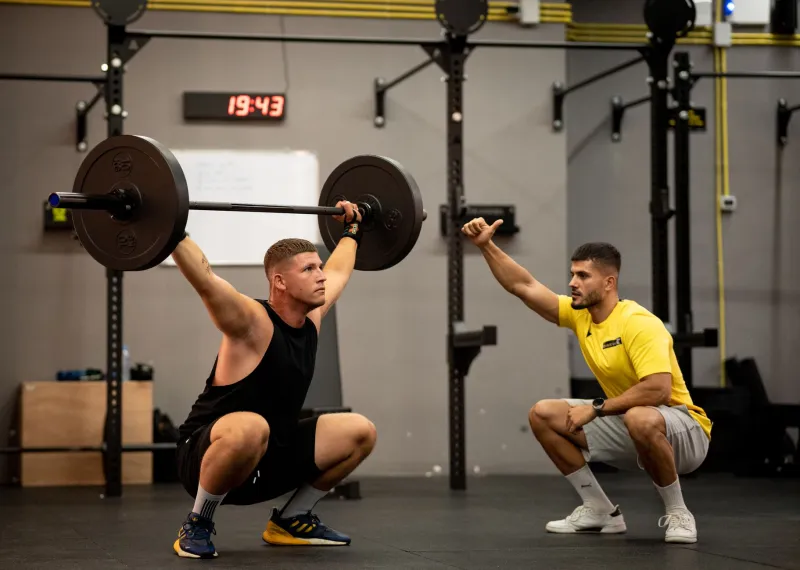
There's a quiet argument happening inside gyms across the United States right now. On one side, you've got the standard American commercial setup — cable stations, Smith machines, preacher curl benches, and leg extension racks as far as the eye can see. On the other side, you've got a growing number of Turkish coaches who walked into these facilities, looked around, and said, essentially: this is not how you build a real physique.
They're not being arrogant. They're being direct. And if you've seen the bodies their athletes are bringing to American stages lately, you're starting to understand they might have a point.
The Machine Problem Nobody Wants to Talk About
Isolation training isn't inherently evil. Let's get that out of the way. Concentration curls, cable flyes, leg extensions — they all have a place. But here's the thing: somewhere along the way, American gym culture let that "place" become the whole program. Walk into a Planet Fitness or a mid-tier commercial gym on a Monday and you'll see guys doing seven different bicep exercises with zero pressing, zero hinging, zero squatting. They look busy. They're not building much.
Can Yılmaz, a Turkish strength coach who relocated to Dallas three years ago after working with competitive bodybuilders in Ankara, puts it plainly: "When I first started training clients here, I asked them to squat. Not on a machine. Just squat. Most of them had never done it consistently. They'd been doing leg press and extensions for years and calling it leg day."
He's not alone in that observation. Turkish coaches working in New York, Los Angeles, and Chicago are telling similar stories. The isolation-first mentality has so thoroughly colonized American gym culture that basic movement competency — the ability to hinge at the hip, brace the core under load, stabilize through a full range of motion — has become genuinely rare.
Why Turkish Coaching Philosophy Goes Compound First
The Turkish approach to training has deep roots that go beyond technique preference. It connects to a broader cultural relationship with physical labor, functional strength, and the idea that your body should work as a single integrated system rather than a collection of parts.
Yağız Demirci, who coaches out of a strength gym in Brooklyn and previously trained athletes in Istanbul, explains it this way: "In Turkey, the coaches I learned from came up through wrestling, weightlifting, and manual trades. Strength wasn't something you built in pieces. You built it through movement. The barbell squat, the deadlift, the overhead press — these weren't just exercises. They were tests of whether your body actually worked."
That philosophy carries directly into how Turkish coaches structure programs for bodybuilding athletes. Rather than organizing training around body parts — chest day, back day, arm day — they tend to organize it around movement patterns. Push, pull, hinge, squat, carry. The muscles get worked, sometimes more thoroughly than they would in an isolation-heavy split, but the stimulus comes through coordinated effort rather than mechanical isolation.
The biomechanical logic is solid. When you squat heavy, you're not just training your quads. You're training your spinal erectors, your glutes, your adductors, your core, and your upper back all at once. You're also training your nervous system to coordinate force production across multiple joints simultaneously. That kind of full-body neural demand doesn't just build muscle — it builds the kind of dense, functional muscularity that reads differently on stage than the softer, disconnected look that can come from machine-only training.
What American Athletes Are Actually Missing
Here's the part that stings a little. American bodybuilders aren't losing ground because they're lazy or uninformed. Most of them are working incredibly hard. The issue is that the type of work they're doing is leaving serious gains on the table.
When you spend years doing leg press instead of squatting, you miss the hip and posterior chain development that gives a physique that three-dimensional, full-muscle-belly look from every angle. When you cable-fly your way through chest sessions without ever doing heavy barbell pressing, you can end up with a chest that looks okay from the front but lacks the thickness and tie-ins that judges are rewarding at the higher levels.
Can Yılmaz has worked with American athletes who came to him after years of commercial gym training and were frustrated by stalled progress. "The first thing I do is take almost everything away," he says. "We go back to the barbell. We squat. We deadlift. We press overhead. At first they hate it because it's hard and they're not good at it. Then, about eight weeks in, they start seeing muscle they've never had before."
The overhead press is a particular point of emphasis for Turkish coaches. It's largely disappeared from American programming — too hard, too technical, too easy to substitute with a machine. But Turkish coaches see it as non-negotiable. Shoulder development, upper chest thickness, trap engagement, core stability — the overhead press trains all of it simultaneously, and it shows on stage in ways that lateral raises alone simply cannot replicate.
A Practical Starting Point for Athletes Ready to Shift
You don't have to blow up your entire program to start moving in this direction. Turkish coaches tend to recommend a phased approach for athletes coming from isolation-heavy backgrounds.
Start with movement audits. Before you change anything, spend two weeks tracking which exercises in your program are compound and which are isolation. Most American athletes are shocked to find that 70–80% of their volume is isolation work.
Anchor every session with a primary compound lift. Squat day, deadlift day, bench day, overhead press day — pick one big movement and let it set the tone. Do it first, when you're fresh, and take it seriously.
Use isolation work to finish, not to fill. Curls, lateral raises, cable work — keep them. Just move them to the back end of your session as finishing work rather than the main event.
Be patient with the learning curve. Compound movements require technical development. The first few months of prioritizing barbell work may feel like regression. It isn't. You're building a foundation that isolation training never gave you.
Yağız Demirci's closing advice for American athletes is straightforward: "The machine will do the work for you if you let it. That's the problem. The barbell doesn't help you. It just tells the truth about where you are. And when you learn to handle that truth, your physique changes in ways the machine never could."
That's the compound conversation Turkish coaches are having with American athletes right now. It's not complicated. It's just uncomfortable — at least until the gains start showing up.