Frame First: The Turkish Waist Secret That's Quietly Winning Modern Bodybuilding Shows
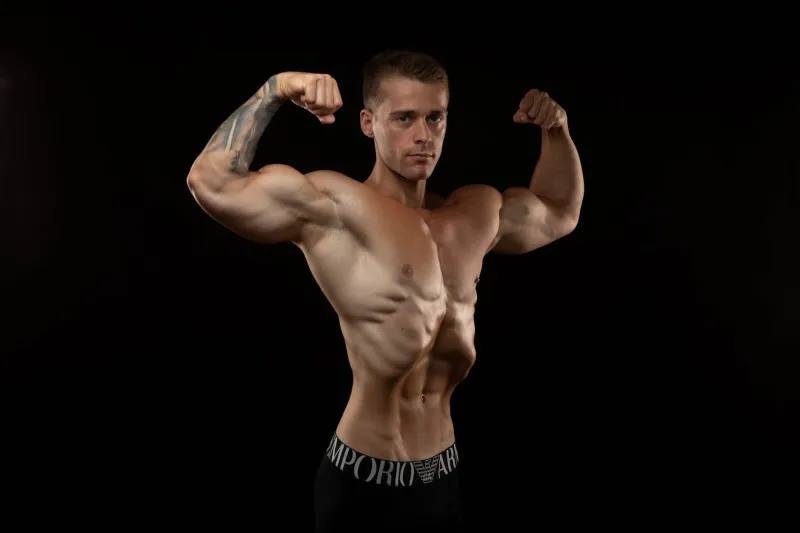
Walk through the backstage area at any major NPC or IFBB Pro League event these days and you'll notice something. The athletes generating the most buzz from judges — the ones who pop under the lights before they've even hit a pose — tend to share a specific silhouette. Wide at the shoulders, tapered hard at the midsection, full in the hips and quads. It's a shape that reads as elite from forty feet away.
Turkish competitors have been delivering that shape consistently, and it's not an accident. There's a combination of structural genetics and deliberate programming behind it. More importantly, a lot of what makes Turkish athletes look the way they do is replicable — even if you weren't born with the same skeletal blueprint.
Why the Waist Matters More Than Ever Right Now
Modern judging criteria — across Classic Physique, Men's Physique, and even Open Bodybuilding — have shifted hard toward proportionality and flow. The era of rewarding sheer mass at all costs is fading. What judges are responding to now is the visual relationship between the upper body, midsection, and lower body. The waist is the fulcrum of that relationship.
A smaller waist doesn't just look good on its own. It makes your shoulders look wider. It makes your lats appear to flare further. It makes your legs look fuller without adding any actual size. It's the single structural element that multiplies the impact of everything else you've built.
Turkish athletes tend to carry naturally narrower iliac crests — the bony structure of the pelvis that largely determines how wide your waist appears at its narrowest point. That's a genetic baseline. But here's what gets overlooked: the muscle tissue surrounding that structure, and how it's developed, trained, and conditioned, matters just as much as the bone underneath it.
The Biomechanics Behind the Look
The waist is defined by several layers of muscle: the rectus abdominis, the obliques, the transverse abdominis, and the erector spinae in the back. Most American lifters train these muscles with the goal of making them bigger or stronger. Turkish bodybuilding tradition approaches them differently — the goal is functional tightness and visual refinement, not hypertrophy for its own sake.
Overdeveloped obliques are one of the most common mistakes in American prep culture. Heavy side bends, loaded oblique crunches, and high-rep weighted rotational work all build lateral thickness. That thickness pushes the waistline outward and kills the taper you're working so hard to create everywhere else. Turkish programming tends to deprioritize direct oblique loading almost entirely — keeping the midsection tight through compound movement bracing and vacuum work rather than targeted hypertrophy.
The vacuum itself deserves its own conversation. It's been a core element of Turkish training culture for decades, borrowed partly from the old-school bodybuilding era and kept alive when most of the Western fitness world moved on. A daily transverse abdominis vacuum — held for 30 to 60 seconds, performed fasted in the morning — develops the deep core musculature that literally pulls the waist inward. Over months and years, the visual effect is significant.
Strategic Muscle Placement: Where You Build Matters
The V-taper isn't just about having a small waist. It's about the contrast between the waist and the structures surrounding it. Turkish athletes are meticulous about where they direct their hypertrophy efforts, and the programming reflects a clear priority hierarchy.
Lats and serratus first. Wide, low-insertion lats create the illusion of a narrower waist from the front and back. Serratus development adds visual complexity to the midsection without adding circumference. Pull-ups, straight-arm pulldowns, and unilateral cable rows targeting the lower lat are foundational movements in Turkish-influenced programming.
Shoulder width over shoulder thickness. Lateral deltoid development directly widens the visual frame. Turkish competitors tend to run high-volume lateral raise work — often 20 to 30 sets per week — while keeping overhead pressing volume moderate to avoid overdeveloping the front delt, which can push the shoulder forward and narrow the profile.
Upper glute and quad sweep. Building the upper glute creates a visual anchor below the waist that amplifies the taper. A full quad sweep — particularly the outer sweep of the vastus lateralis — widens the lower body in a way that makes the midsection appear even more cinched. Hip thrusts, Bulgarian split squats, and leg press with a wider stance are staples.
Conditioning Without Destruction
One of the traps American competitors fall into is trying to reveal the waist through extreme caloric restriction. It works in the short term, but it comes with costs — muscle loss, hormonal disruption, and a flat, deflated look that doesn't read well under stage lighting.
Turkish prep philosophy leans heavily on gradual, sustained conditioning rather than aggressive cuts. The goal is to arrive at show weight having lost primarily fat while retaining as much fullness as possible. This means longer prep windows (16 to 20 weeks is common), modest caloric deficits that preserve metabolic function, and strategic carbohydrate management rather than blanket carb elimination.
The result is a waist that looks tight because it's genuinely lean and well-developed — not because the athlete is depleted and hollowed out. Judges at the national and pro level can tell the difference, and it shows in the placings.
Programming Adjustments You Can Make Right Now
You don't need to overhaul your entire training block to start moving in this direction. A few targeted adjustments can shift your proportions meaningfully over a full training cycle.
Drop direct oblique loading from your routine for 12 weeks. Replace it with daily vacuum holds and Pilates-style transverse work. Pay attention to how your waist looks and measures at the end of that period.
Add two dedicated lat-width sessions per week using movements that emphasize the lower lat insertion — think straight-arm pulldowns and single-arm rows with a focus on full stretch at the top.
Bump your lateral raise volume by 30 percent. Keep the weight light enough to feel the medial delt working through the full range. This isn't a strength movement — it's a sculpting tool.
And if you're not already doing morning vacuums, start tomorrow. It costs nothing, takes two minutes, and the long-term payoff on your stage presence is real.
The Bigger Picture
Turkish bodybuilding has always understood something that's only recently becoming mainstream in American competition culture: the body is a visual argument, and proportion is the most persuasive element in that argument. Mass matters. Conditioning matters. But the frame underneath everything — the structural story your skeleton and its surrounding tissue tells from the moment you walk onstage — matters most of all.
Building a smaller, tighter waist isn't about restriction or extremity. It's about intelligent training, strategic muscle placement, and the kind of patient, long-view programming that Turkish athletes have been executing for generations. The tools are available. The question is whether you're willing to use them.