Duty Over Dopamine: The Turkish Mental Framework That Outlasts Every Motivational Trend
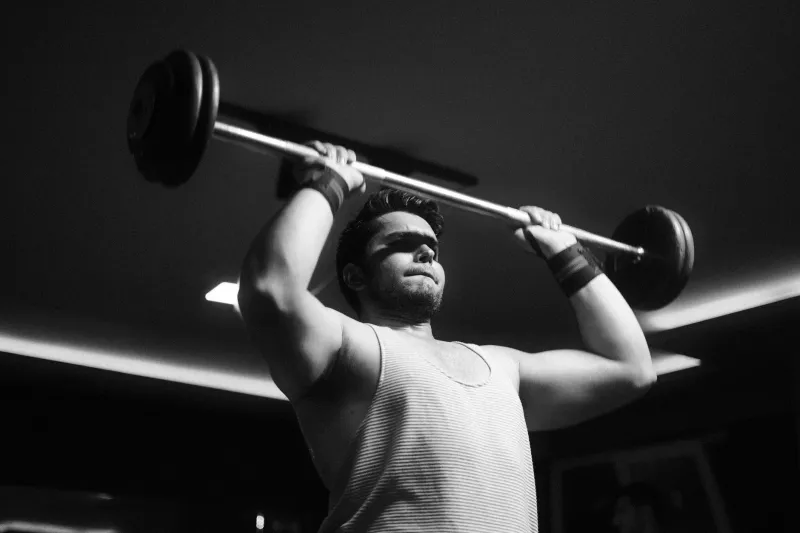
You've seen the YouTube compilations. The screaming coaches, the dramatic music drops, the athlete staring into the middle distance before pulling something superhuman off the floor. American gym culture has practically built an industry around the idea that you need to feel something before you can do something.
Turkish bodybuilders, by and large, think that's kind of funny.
Not in a dismissive way — they get it. Hype has its place. But the athletes coming out of Turkey's competitive scene, and the Turkish-American lifters who've carried that culture into gyms across the US, operate from a fundamentally different psychological starting point. One that doesn't require a spark to get going. One that, frankly, produces more consistent results over the long haul.
It comes down to a single word that translates roughly to duty, obligation, or simply: this is what you do.
The Problem With Chasing the Feeling
Motivation is a mood. And moods are unreliable.
Anyone who's been lifting seriously for more than a year knows this. There are days when you walk into the gym charged up, plates feel light, everything clicks. And then there are the other 80 percent of sessions — the ones after a bad night's sleep, a rough week at work, or just a Tuesday where nothing feels particularly exciting about another set of Romanian deadlifts.
American fitness culture has responded to this reality by building an entire ecosystem designed to manufacture motivation on demand. Pre-workout formulas, hype playlists, social media accountability chains, vision boards. The implicit message is: if you can just get yourself feeling it, the work will follow.
The Turkish approach flips that entirely. The work doesn't follow the feeling. The feeling — eventually, sometimes, not always — follows the work. And whether it shows up or not is kind of beside the point.
What Stoicism Looks Like Under a Loaded Bar
Stoicism gets thrown around a lot in Western fitness circles, usually as a marketing term slapped on a supplement brand or a podcast intro. But there's a version of it that's genuinely embedded in Turkish cultural identity — less about ancient Greek philosophy and more about a lived tradition of enduring hard things without making a production of it.
Turkish athletes, particularly those shaped by coaches from older training traditions, tend to treat the gym as a proving ground rather than a stage. You're not there to perform effort. You're there to apply it. The distinction matters more than it sounds.
When a Turkish competitor hits a plateau — and they hit them like everyone else — the internal response isn't typically I need to find my motivation again. It's closer to the work is the same, I just need to keep doing it. There's no crisis of inspiration because inspiration was never the fuel source to begin with.
That's a quieter, less photogenic approach to training. It doesn't make for great Instagram content. But it keeps athletes in the gym, week after week, year after year, while others cycle through phases of obsession and burnout.
The Role of Community Accountability
Part of what sustains this mindset is structural, not just philosophical. Turkish gym culture — both abroad and in Turkish-American communities here in the States — tends to be built around tight-knit training groups where your consistency is visible to people who matter to you.
This isn't accountability in the social media sense, where you post a check-in and collect likes. It's accountability in the older, more loaded sense: people you respect are watching, and showing up halfway or skipping because you're not "feeling it" reflects on your character, not just your fitness goals.
That communal layer functions as a kind of external scaffolding for the internal discipline. Over time, the external expectation gets internalized. You stop needing someone to notice because you've already built the standard into your own identity.
American gym culture has individual accountability nailed. Turkish gym culture adds a relational dimension that makes the whole thing stickier.
Plateaus as Process, Not Problems
Here's where the mindset difference becomes most practically visible: how athletes handle the inevitable stalls.
For a lifter operating on motivation-as-fuel, a plateau is a crisis. Progress has stopped, which means the thing that was generating excitement has dried up, which means motivation collapses, which means the training suffers further. It's a feedback loop that ends careers.
For a lifter operating on duty-as-fuel, a plateau is just a longer stretch of the same road. You don't need it to be exciting to keep driving. You assess, adjust where necessary, and continue. The emotional temperature stays flat because it was never supposed to be high in the first place.
Turkish coaches — including several who've relocated to major US cities and built strong reputations in competitive bodybuilding circles — often describe their athletes' relationship with plateaus in almost boring terms. We changed the programming slightly. We waited. Progress resumed. No dramatic reinvention. No identity crisis. Just patience applied with discipline.
Building Your Own Mental Callus
You don't have to be Turkish to adopt this framework. But you do have to be willing to let go of the idea that your training sessions need to feel good to count.
A few practical shifts that Turkish athletes and coaches consistently point to:
Detach outcome from emotion. The session was either completed or it wasn't. How it felt is secondary data at best.
Build your identity around the process, not the results. "I am someone who trains" is a more durable identity than "I am someone who is getting results." The latter collapses when progress stalls. The former doesn't.
Lower the stakes on individual sessions. One bad workout is noise. One missed week is a small setback. The only thing that actually derails progress is quitting — and quitting usually starts with attaching too much meaning to short-term fluctuations.
Find your people, not your hype. A training partner who holds you to a standard is worth more than a playlist that fires you up. The playlist runs out. The standard doesn't.
The Long View
There's a reason Turkish bodybuilders are consistently known for longevity in the sport — competing well into their late 30s and 40s at levels that would represent peak achievement for lifters a decade younger. It's not purely genetic. It's not purely programming. A significant piece of it is psychological.
When your training isn't powered by a feeling that can disappear overnight, it doesn't disappear overnight. The iron is still there tomorrow. The duty to show up is still there tomorrow. And that, more than any pre-workout formula or motivational speech, is what builds a career worth having.
The Turkish mindset muscle isn't flashy. It doesn't trend. But it's the one that keeps working long after everything else has burned out.