The Long Game: Why Turkish Bodybuilders Outbuild Americans by Refusing to Rush
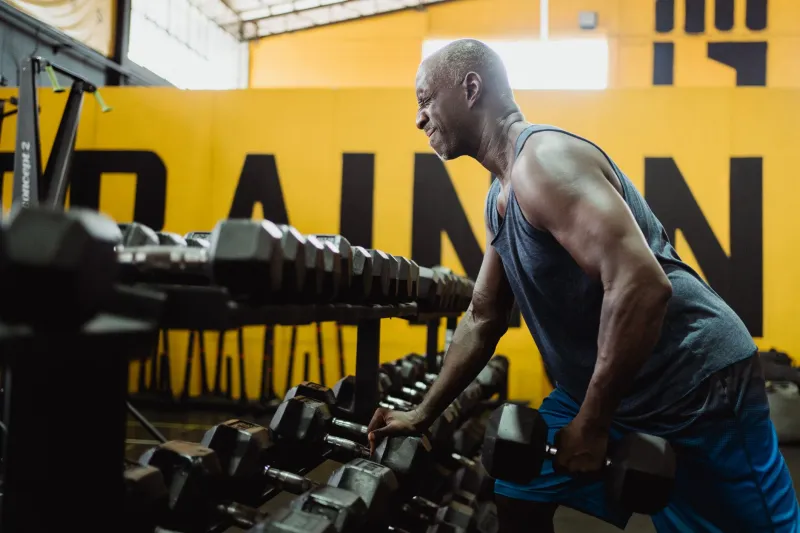
Walk into almost any commercial gym in the US right now and you'll find someone mid-way through a six-week shred, a 30-day challenge, or a transformation program they found on Instagram at 11pm. The marketing machine has done its job — Americans are conditioned to expect fast results, dramatic before-and-afters, and measurable change on a timeline that fits between two holidays.
Turkish bodybuilders look at that approach and, respectfully, shake their heads.
This isn't a knock on American hustle. The drive to improve is real, and the US produces elite competitors at every level of the sport. But there's a growing conversation among coaches and athletes in the Turkish bodybuilding community — both in Turkey and in Turkish-American circles stateside — about why so many American lifters plateau early, burn out mid-career, or peak once and never get back there. The answer, more often than not, comes back to the same thing: impatience.
The Culture Behind the Calendar
Turkey has a concept embedded deep in its cultural DNA — sabır, which translates roughly to patience, but carries more weight than the English word suggests. It's not passive waiting. It's disciplined endurance. It's trusting a process you've committed to even when the results aren't visible yet.
In athletic development, sabır shows up as a refusal to compress timelines that aren't meant to be compressed. A Turkish coach working with a promising 19-year-old isn't thinking about what that athlete can look like in 12 weeks. They're thinking about where that athlete can be at 26, at 30, at 35. The entire training structure — the loading, the recovery, the competition schedule — is built backward from that long-horizon vision.
American coaches are often just as knowledgeable, but the market pressure is different. Clients want to see progress fast. Gyms sell memberships on transformation promises. Sponsors want athletes who peak on social media timelines. The incentive structure pushes everyone toward short cycles, and it quietly erodes the foundation that long-term competitive success actually requires.
What Multi-Year Periodization Actually Looks Like
Here's where the rubber meets the road. Turkish athletes competing at a high level typically operate within periodization frameworks that span three to five years, not three to five months. A single competitive season is treated as one chapter in a much longer story — not the whole book.
In practical terms, this means a young Turkish competitor might spend their first two years of serious training doing almost no contest prep at all. Instead, they're building structural muscle, reinforcing joint integrity, learning how their individual body responds to different training stimuli, and developing the nutritional habits that will carry them through a decade of competition. They're not rushing to the stage. They're building the body that will eventually dominate it.
Contrast that with the American pipeline, where a lifter who shows early promise is often fast-tracked into competition within months, cutting hard before their muscle base is truly developed, and burning through their best hormonal years chasing a peak they haven't yet earned the foundation to sustain.
Turkish periodization also treats off-seasons with a seriousness that American culture tends to undervalue. The off-season isn't a break from training — it's where the real work happens. Progressive overload is applied methodically over long blocks. Weak points are addressed without the pressure of an upcoming show. Bodyweight is managed within a range that protects metabolic health rather than swinging wildly between extreme bulk and extreme cut.
Generational Coaching: The Advantage Money Can't Buy
One of the most underappreciated elements of Turkish athletic development is how coaching knowledge moves through generations. In Turkey, it's common for a lifter to train under a coach who trained under that coach's coach — creating an unbroken chain of practical wisdom that gets refined and passed down over decades.
This isn't just tradition for tradition's sake. It means that a young Turkish athlete benefits from accumulated pattern recognition that no certification course can replicate. Their coach has seen hundreds of bodies respond to hundreds of variables over a career spanning 20 or 30 years. They know what early overtraining looks like before it becomes injury. They know which athletes need to be pushed and which need to be held back. They know that the kid who looks incredible at 21 might flame out at 24 if you don't manage his ego and his training load right now.
American gyms have excellent coaches too, but the culture of rapid credentialing and the transactional nature of personal training in the US means that deep, longitudinal relationships between coach and athlete are rarer than they should be. Athletes switch coaches chasing methodologies. Coaches turn over clients chasing revenue. The continuity that builds real champions gets interrupted.
Delayed Gratification as a Competitive Edge
Here's the paradox: the Turkish athletes who are slowest to compete are often the ones who end up competing the longest. By not rushing to peak early, they preserve the physical and psychological resources that sustain a career over 10 or 15 years. Their joints haven't been ground down by premature heavy loading. Their metabolisms haven't been wrecked by repeated extreme cuts. Their relationship with the sport is still rooted in genuine love rather than the anxiety of someone who peaked too fast and is desperately trying to get back there.
For American lifters, this is actually an actionable insight — not just a cultural observation. If you're three years into serious training and you're already thinking about your third or fourth contest, ask yourself whether you're competing because your body is ready or because you're impatient. There's no shame in the answer, but it matters.
The athletes who build the most impressive physiques over time are almost never the ones who rushed. They're the ones who stayed in the gym when nobody was watching, trusted a process that didn't produce Instagram content every week, and let their foundation get genuinely deep before they tried to build the peak.
What You Can Actually Take From This
You don't have to move to Istanbul to adopt this mindset. A few practical shifts can start changing your trajectory today.
First, extend your planning horizon. Instead of asking what you'll look like in 12 weeks, ask what you want to look like in three years — and build your current training block to serve that goal, not undermine it.
Second, respect your off-season. Treat it as the productive phase it actually is. Set strength benchmarks, address structural weaknesses, and resist the urge to stay perpetually lean at the cost of real muscle development.
Third, invest in coaching relationships that last. A coach who knows your body over multiple years is exponentially more valuable than a new program every few months.
The Turkish bodybuilding tradition didn't build champions by moving fast. It built them by moving smart, moving consistently, and trusting that the body rewards patience in ways that shortcuts simply cannot replicate.
The iron doesn't lie, and it doesn't rush. Neither should you.