Still Sharp at 45: The Turkish Blueprint for Staying Competition-Ready Decades After Most Lifters Quit
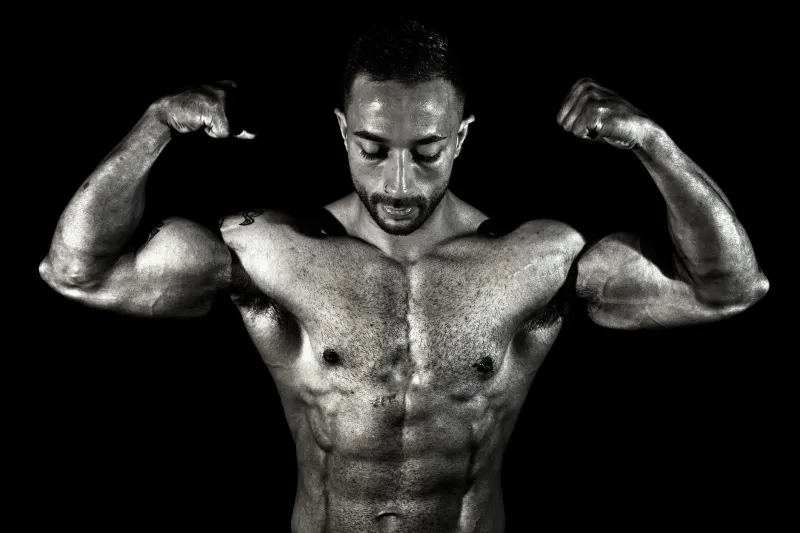
There's a pattern you see over and over again in American bodybuilding. An athlete bursts onto the scene in their mid-20s, dominates for maybe five or six years, then either burns out, breaks down, or simply disappears from competition. The sport chews people up fast. The culture rewards urgency — bigger now, leaner now, more extreme now — and the body eventually sends the bill.
Then you look at what's happening with Turkish competitors, both in Turkey and increasingly on American stages, and something completely different is going on. Athletes who are 42, 47, even into their early 50s, showing up with conditioning that would embarrass guys half their age. Not coasting on experience. Actually competing. Actually winning.
So what gives?
The Problem With Peaking Too Early
Before we get into what Turkish athletes do right, it's worth understanding what so many American athletes do wrong. The obsession with peaking early is baked into American fitness culture. Social media rewards the dramatic transformation. Sponsors want the flashy before-and-after. Competitions get stacked with young athletes who've pushed every lever to the max in a short window.
The problem is biological. When you chronically overtrain, under-recover, and cycle aggressively through extreme bulks and cuts in your 20s, you're essentially spending hormonal and structural capital you don't have yet. You're burning through joint integrity, suppressing your endocrine system, and training your nervous system to operate in a permanent state of stress. By the time most American competitors hit 35, the body has already started presenting the invoice.
Turkish bodybuilding culture, both in Turkey and among Turkish-American athletes who've carried that tradition stateside, tends to operate on a fundamentally different timeline.
Building Slow, Building Permanent
One of the most consistent things you'll hear from Turkish coaches and veteran competitors is the concept of sürdürülebilirlik — sustainability. It's not just a training philosophy, it's almost a moral stance. Rushing your development is seen as wasteful, even disrespectful to the process.
In practical terms, this means Turkish athletes typically spend far more time in moderate-intensity training phases before ever approaching maximum loads. Where an American lifter might chase a one-rep max PR every few weeks, a Turkish-influenced training block might go months without ever testing absolute limits. The goal is to build structural density — tendons, ligaments, the connective tissue matrix that supports muscle — before piling on mass.
This approach doesn't produce Instagram-friendly progress photos on a six-week timeline. But at 44, those tendons are still intact. That matters enormously.
Periodization as a Lifelong Practice
American periodization tends to be contest-driven. You have an off-season, a prep, a show, then recovery. Rinse and repeat. The problem is that "recovery" often means very little actual recovery — just a brief window before the next aggressive phase begins.
Turkish athletes and their coaches tend to think in much longer cycles. Not just annual periodization, but decade-long periodization. Your 20s are for building the foundation. Your 30s are for refining and competing. Your 40s and beyond are where you actually cash in on everything you built. The competitive peak, in this model, doesn't come at 25 — it comes at 38, 42, sometimes later.
That framework completely changes how you manage training volume, intensity, and recovery at every stage. It removes the pressure to be maxed out right now, which paradoxically allows athletes to train harder and more consistently over the long haul.
Hormonal Management Without Destruction
Let's be real — competitive bodybuilding at any serious level involves hormonal considerations. That's not a secret. But the approach to hormonal management in Turkish bodybuilding culture tends to be more conservative and more strategically timed than what's common in American competition circles.
Rather than running aggressive protocols year-round from an early age, Turkish athletes and their coaches more commonly take a cautious approach during developmental years, reserving more significant interventions for specific competitive windows. The result is that the endocrine system isn't chronically suppressed for years on end. Natural hormonal function is preserved longer, which means the body retains its ability to respond to training stimuli well into middle age.
Combine that with lifestyle factors — consistent sleep, lower chronic stress, and dietary patterns rooted in Mediterranean and Middle Eastern food traditions that are naturally anti-inflammatory — and you've got an internal environment that simply ages better.
The Lifestyle Variable Americans Underestimate
This one's harder to quantify, but it's real. Turkish culture places a genuine value on community, shared meals, and rhythmic daily routines. Stress is managed differently. The idea of grinding yourself into the ground seven days a week in pursuit of a physique goal isn't celebrated the same way it is in American gym culture.
For Turkish-American athletes especially, maintaining those lifestyle anchors — the family dinners, the slower weekend pace, the communal aspects of training — creates a recovery environment that most American competitors simply don't have. Chronic cortisol elevation is one of the most underrated enemies of long-term athletic performance. A lifestyle that naturally moderates stress is a serious competitive advantage that never shows up on a supplement label.
What American Lifters Can Actually Apply
You don't need to overhaul your entire life to borrow from this model. But a few specific adjustments could meaningfully extend your competitive window:
Reframe your timeline. If you're 24 and training hard, your goal shouldn't be to peak at 28. Build the foundation now so your peak hits at 36 or 40. That shift in mindset changes every training decision you make.
Invest in connective tissue. Add dedicated tendon and ligament work to your programming. Slow eccentrics, isometric holds, and controlled tempo work aren't glamorous, but they're what keeps you on the platform at 45.
Take recovery phases seriously. Not as downtime. As training. A proper deload or low-intensity block isn't lost progress — it's the investment that makes the next hard phase actually productive.
Manage your hormonal capital. If you're 22 and thinking about aggressive cycling, consider what you're spending and whether the short-term gain is worth the long-term cost to your endocrine health.
Eat for longevity, not just macros. Turkish dietary staples — olive oil, legumes, fermented dairy, lean proteins, abundant vegetables — aren't just good nutrition, they're anti-inflammatory by design. Your joints and hormonal system will thank you in 20 years.
The Patience Paradox in Practice
Here's the thing that makes this all a little counterintuitive: the athletes who are willing to wait longer for their peak end up with a much longer career at or near that peak. The ones who rush it get five good years. The ones who build it right get fifteen.
That's the patience paradox. Slowing down, in the Turkish tradition, is actually the fastest way to a long and successful competitive life. The American model of urgency produces early results and early exits. The Turkish model produces athletes who are still turning heads on stage at an age when most of their competitors have long since hung up their posing trunks.
The iron doesn't care how old you are. It responds to consistency, intelligence, and respect for the process. That's a lesson Turkish bodybuilding has been teaching for generations — and one that American athletes are only just starting to learn.