Unwritten Rules, Unbeatable Culture: What Turkish Gym Etiquette Teaches America About Earning Your Space Under the Bar
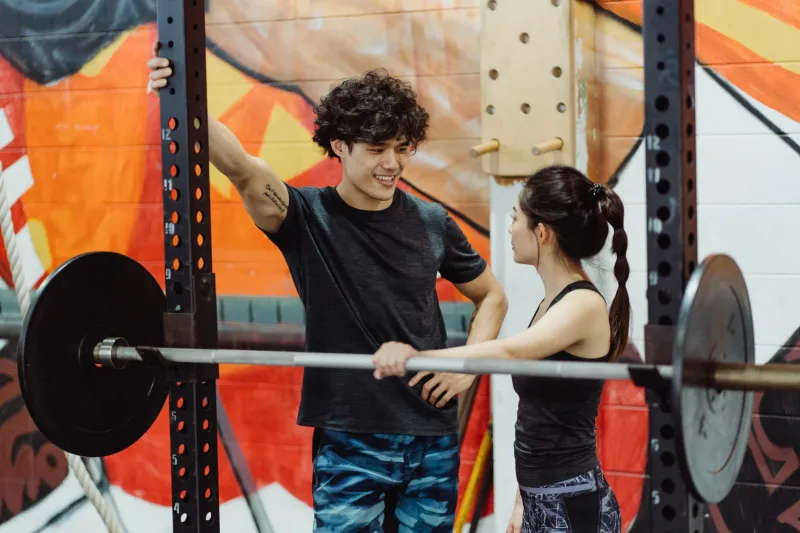
Walk into a commercial gym in the United States on a Monday evening and you'll see the same familiar chaos: three guys circling the only open squat rack like sharks, someone's water bottle "saving" a bench they haven't touched in twenty minutes, and a pair of dumbbells abandoned halfway across the floor. Nobody's being malicious. The culture just never taught them any better.
Now picture a mid-sized gym in Ankara or Izmir. Different energy entirely. Equipment moves with purpose. Racks get used and released. Seniors lift, and younger athletes watch — not out of intimidation, but out of genuine respect for what those older lifters have built over years. It's not a stricter place. It's just a more ordered one, and that order quietly produces better athletes.
At Bodybuilding Türkiye, we talk a lot about what Turkish training philosophy can offer American lifters. Today, we're going deeper than programming. We're talking about gym culture itself — the invisible architecture that either holds a training community together or lets it slowly fall apart.
The Rack Isn't Yours. It's Everyone's — In Order.
In Turkish gyms, the squat rack carries a weight beyond whatever's loaded on the bar. There's a social hierarchy built around it, and it runs on seniority, preparation, and efficiency — not on who got there first with their gym bag.
Experienced lifters aren't necessarily given preferential access because of ego. They're respected because they've demonstrated they know how to use the equipment correctly, won't waste time, and will leave the station better than they found it. Younger or newer lifters learn by watching this behavior and eventually inheriting it. It's a passing of the torch that happens without anyone announcing it.
In most American commercial gyms, the rack hierarchy is determined by whoever arrives first and stays longest — often with little regard for anyone else's schedule. That's not entirely the fault of individual lifters. It's a cultural gap. Turkish gym culture treats shared equipment as a communal resource that every member is responsible for maintaining. American gym culture, shaped partly by individualism and partly by a transactional membership model, often defaults to "I pay for this, so it's mine right now."
Both systems reflect broader values. But only one of them consistently builds tighter training communities.
Preparation Is Respect
One of the most noticeable differences in Turkish gym culture is how lifters approach a session before they even touch a barbell. Showing up unprepared — unsure of what you're training, how many sets you need, what weight you'll be moving — is quietly frowned upon. Not because anyone will say something, but because wasting time on shared equipment while you figure it out is considered a mild form of disrespect to everyone else in the room.
This mindset produces a kind of efficiency that American gyms often lack. When you know exactly what you need and how long it'll take, you move through equipment faster, you're more willing to share mid-session, and you're more likely to be done when you said you would be. The whole gym flows better.
For US lifters, this is one of the easiest cultural habits to adopt immediately. Walk in with a plan. Know your working weights. Know your rest periods. If you're going to be on the rack for forty-five minutes, communicate that to whoever's waiting. Simple stuff — but it changes the entire atmosphere of a session.
The Art of the Working-In
In Turkey, asking to work in with someone on a piece of equipment isn't awkward. It's normal. It's expected. The assumption is that the equipment belongs to the gym, not to the person currently using it, and that two people can often share a rack without either one suffering for it.
In American gyms, asking to work in can feel like a social confrontation. People get territorial. There's an unspoken anxiety around it that makes everyone less efficient and more isolated. Lifters end up waiting unnecessarily while equipment sits idle between sets, purely because nobody wants to have the conversation.
Turkish gym culture removes that anxiety by building the expectation of sharing into the culture from the start. When you grow up training in environments where working in is just what you do, you stop treating it like an imposition. You start treating it like a collaboration — which, honestly, it is.
Seniority Without Arrogance
Here's where Turkish gym culture gets genuinely interesting for American lifters to consider. Respect for experienced athletes isn't about intimidation or gatekeeping. It's about knowledge transfer.
In a well-functioning Turkish gym, a veteran lifter isn't hoarding secrets. They're modeling behavior — showing younger athletes what disciplined, consistent training looks like across years and decades. That kind of long-view mentorship doesn't require formal coaching. It just requires an environment where experience is visibly valued.
American gym culture tends to flatten hierarchy. Everyone's equal, everyone's welcome, and that's genuinely great for accessibility. But it can also mean that hard-won knowledge doesn't flow naturally from experienced lifters to newer ones. The gyms that do this well in the US — the serious powerlifting clubs, the competitive bodybuilding gyms — tend to have a more Turkish-style social structure, even if they've never thought about it that way.
Small Rules, Big Outcomes
The specific etiquette differences between Turkish and American gyms aren't dramatic. We're talking about things like:
- Re-racking weights completely, not just sliding them to the side of the bar
- Wiping equipment before and after use, not just after
- Acknowledging other lifters when you enter a space they're working in
- Not performing exercises in front of mirrors that someone else is actively using for form checks
- Keeping phone use minimal during working sets, especially on shared equipment
None of these are revolutionary. But when they become cultural norms rather than posted rules, they compound. A gym where everyone genuinely practices these habits doesn't feel like a gym with rules. It feels like a community with standards — and that's a completely different experience to train in.
What You Can Actually Do About It
You can't redesign your gym's culture overnight, but you can model the behavior you want to see. That's exactly how Turkish gym culture maintains itself — through consistent example, not enforcement.
Start with your own habits. Prepare before you arrive. Work in with others when it makes sense. Re-rack everything. Acknowledge the experienced lifters around you, not with deference, but with the kind of simple respect that says you understand you're sharing a space with people who've put serious time into this.
Over time, that behavior becomes visible. Other lifters notice it. Some of them adopt it. The culture shifts, incrementally, in the direction you're pushing.
Turkish gym culture didn't emerge from a rulebook. It emerged from generations of lifters who understood that how you treat shared space reflects how seriously you take the craft. The iron doesn't care about your gym's posted policies. It responds to discipline, preparation, and respect — the same things it always has.
Bring that mindset to your next session. See what changes.