Fast by Design: What Turkish Athletes Know About Ramadan Training That Should Reshape Your Entire Off-Season
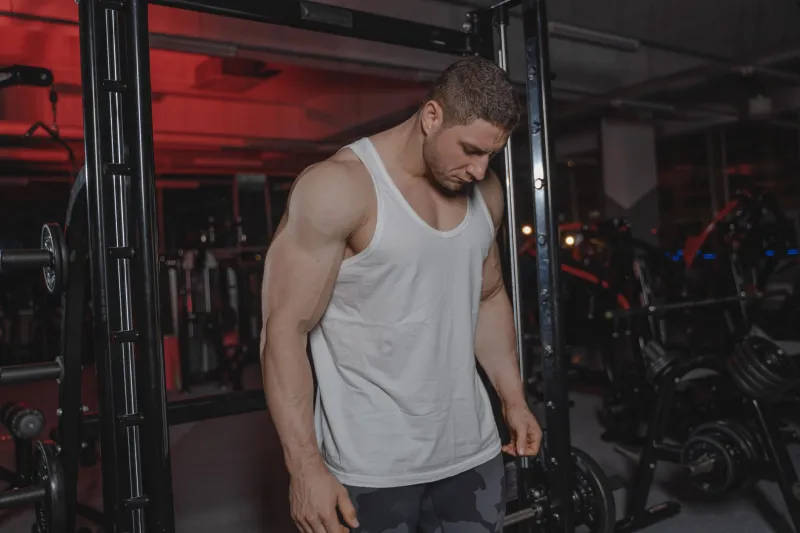
Most American lifters hear "fasting" and immediately picture muscle loss, sluggish workouts, and a month of damage control. That's not the story Turkish bodybuilders are living every Ramadan.
For athletes who've grown up balancing faith and physique goals, the holy month isn't a setback — it's a recalibration. A structured, intentional shift in how the body fuels itself, recovers, and ultimately adapts. What emerges from that month isn't a depleted version of the athlete who went in. It's often a leaner, more metabolically efficient one — with a mental edge that no pre-workout can replicate.
Let's break down how they do it, and more importantly, how you can extract those same principles for your own programming.
The Setup: Understanding What Ramadan Actually Demands
During Ramadan, observant Muslims abstain from food and water from Fajr (pre-dawn) to Maghrib (sunset). Depending on the time of year and geographic location, that window can stretch anywhere from 12 to 17 hours. For a competitive bodybuilder, that's not a minor inconvenience — it's a fundamental restructuring of nutrient timing, hydration strategy, and training scheduling.
The challenge isn't just caloric. It's the compounding effect of sleep disruption from late-night Tarawih prayers, the psychological weight of restraint, and the physical demand of maintaining training volume without intra-workout fuel. Turkish athletes competing at regional and national levels deal with all of this simultaneously. And they've built a system around it.
Training Timing: The Window That Changes Everything
The single biggest tactical adjustment Turkish bodybuilders make during Ramadan is shifting their training window to just before Iftar — the evening meal that breaks the fast — or shortly after it.
Training right before Iftar means you're pushing through the tail end of the fast, then immediately refueling with a full meal. Your body gets the anabolic signal of resistance training followed by a substantial protein and carbohydrate hit within minutes. The hunger-driven focus in that pre-Iftar session? Athletes describe it as some of the most locked-in training of their entire year.
Post-Iftar training, typically 60 to 90 minutes after the meal, offers better performance output. Glycogen is partially restored, hydration is improving, and the body is primed to handle moderate to high intensity. Many Turkish athletes rotate between these two windows across the week, managing fatigue while keeping training frequency intact.
The takeaway for American lifters: stop assuming your training window is fixed. Periodically shifting when you train relative to your last meal — whether that's intentional fasted training or post-meal sessions — trains your body to perform under varied metabolic conditions. That adaptability pays dividends in competition prep when meal timing gets squeezed.
Intensity Management: Volume Takes a Hit So Intensity Can Survive
Here's where Turkish athletes get pragmatic. Ramadan is not the month to chase PRs or push hypertrophy volume to its ceiling. Experienced competitors understand that the goal is muscle retention, not muscle building — and they program accordingly.
Total weekly volume drops. Sets per muscle group come down. Rest periods extend slightly to account for reduced glycogen and hydration. But intensity — the load on the bar relative to max effort — stays high. Compound movements remain the foundation. The stimulus for muscle retention is preserved even as the overall workload decreases.
This mirrors the logic behind effective deload programming, except it's sustained over four weeks rather than one. The body learns to do more with less. Neuromuscular efficiency improves. And when full caloric intake resumes after Eid, athletes often experience a pronounced rebound in strength and fullness — what some Turkish coaches call the "post-Ramadan surge."
For American competitors in an extended off-season or diet phase: if you're running a caloric deficit for more than three weeks, deliberately cycling your volume down while preserving your intensity isn't a concession — it's the smart play. You're not losing fitness. You're managing resources.
Nutrient Timing in a Compressed Window
With eating confined to the hours between Iftar and Suhoor (the pre-dawn meal), Turkish bodybuilders become extremely deliberate about what goes in and when.
The Iftar meal prioritizes fast-digesting carbohydrates and a moderate protein hit to rapidly restore blood glucose and begin muscle protein synthesis. Think dates, rice, lean meat — foods that appear on Ramadan tables across Turkey not just for cultural reasons, but because they work physiologically.
The later evening meal, eaten before sleep or closer to Suhoor, shifts toward slower-digesting proteins — eggs, legumes, yogurt, or cottage cheese — combined with complex carbs and healthy fats to sustain the body through the upcoming fast. It's essentially a slow-release fuel load.
Suhoor, the meal before dawn, is the most strategically critical. Athletes who skip it struggle significantly more through the fasting hours. The ideal Suhoor for a bodybuilder includes casein-rich proteins, oats or whole grains, and sufficient water and electrolytes to buffer against the dehydration that builds through the day.
The parallel for non-fasting athletes managing irregular eating — travel, competition schedules, early morning cardio — is direct. Compressing your feeding window doesn't have to mean suboptimal nutrition. It means ruthless prioritization of what each meal needs to accomplish.
The Mental Architecture of Extended Restraint
This part doesn't get enough credit in Western fitness conversations. The mental dimension of Ramadan training is arguably its most transferable asset.
Going into a hard training session at hour 14 of a fast — thirsty, hungry, and tired — and executing with precision builds a psychological tolerance for discomfort that is genuinely difficult to manufacture in any other context. Turkish athletes who've competed through multiple Ramadans talk about it consistently: the month strips away the psychological dependence on perfect conditions.
American bodybuilders often struggle in competition prep precisely because the conditions are never perfect. The hotel breakfast doesn't have your macros. The gym at the venue is unfamiliar. You're tired and depleted and expected to pose on stage like it's the best day of your life. Athletes who've trained through Ramadan have already proven to themselves that performance is possible when circumstances aren't ideal.
You can build a version of this without fasting. Deliberately train under suboptimal conditions — skip the pre-workout, train earlier or later than usual, cut a meal before a heavy session. Not recklessly, but intentionally. The goal is to expand your operating range.
What the Off-Season Can Actually Borrow
You don't have to observe Ramadan to apply its principles. Here's a practical framework:
Compressed eating windows (4–6 weeks): Run a structured period where all meals fall within a 6–8 hour window. Train at the edge of the fast or shortly after breaking it. Monitor muscle retention and metabolic markers.
Volume cycling under deficit: If you're cutting, reduce weekly sets by 20–30% while maintaining load intensity. Don't try to maintain full hypertrophy volume in a sustained deficit — it's a recipe for burnout and muscle loss.
Strategic anchor meals: Identify two non-negotiable meals — one post-training, one pre-sleep — and build your nutrition around those regardless of how the rest of the day shifts. This mirrors the Iftar and Suhoor priority structure.
Deliberate discomfort blocks: Once per training cycle, run a week where conditions are intentionally imperfect. This isn't punishment — it's stress inoculation.
Iron Discipline, Any Calendar
Ramadan produces some of the most mentally disciplined athletes in the world every year, and Turkey's bodybuilding community is proof that faith and physique can coexist at a high level. The strategies they've developed aren't mystical — they're grounded in sound periodization, intelligent nutrition timing, and a psychological framework that most Western programs never address.
Your off-season doesn't need a holy month to access these benefits. It just needs a plan built with the same intentionality. Borrow the structure. Apply the discipline. And see what your body can do when you stop requiring perfect conditions to perform.