Calloused Hands, Crushing Pulls: How Turkish Trade Heritage Builds Grip Strength Gyms Can't Replicate
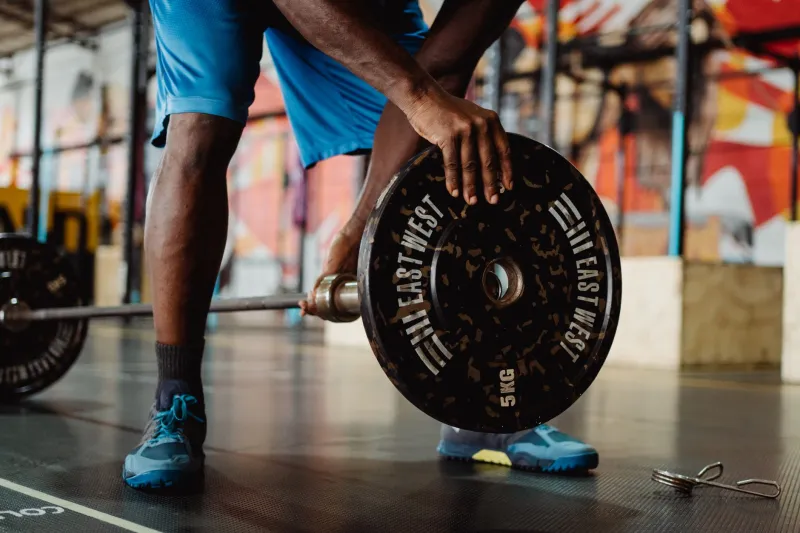
Walk into any commercial gym on a Saturday morning and you'll find someone with a perfectly optimized training log, chalk-dusted hands, and a grip that gives out at 405 pounds. Then there's the guy next to him — maybe second-generation Turkish-American, maybe grew up helping his father at a metalworking shop or watching his grandmother warp threads on a loom — pulling 500 like he's done it his whole life. Because, in a way, he has.
This isn't a feel-good story about heritage. It's about biomechanics, connective tissue adaptation, and why the most effective grip training program might not be a program at all.
What Carpet Weavers and Blacksmiths Have in Common With Elite Pullers
Traditional Turkish trades are physically demanding in ways that are remarkably specific to pulling strength. Carpet weaving — still practiced widely in Anatolia and carried into Turkish-American households as a cultural craft — requires sustained isometric tension through the fingers and forearms for hours at a stretch. The motion of pulling weft threads tight, knotting wool, and maintaining consistent tension across a loom isn't dramatic. It doesn't look like training. But over months and years, it produces tendon thickness and forearm endurance that isolated gym exercises rarely achieve.
Metalworking tells a similar story. Traditional Turkish blacksmithing and copperworking — trades that remain active in artisan communities across the US — demand grip patterns that cycle through crushing, pinching, and supporting loads. Hammering sheet copper into a decorative tray might not feel like deadlift prep, but the forearm flexors and extensors are firing in patterns that mirror exactly what happens when you're trying to hold onto a loaded barbell for a heavy single.
The key difference between this kind of work and gym training isn't intensity — it's duration and variety. Occupational hand work happens for hours, not sets. And it happens across dozens of grip angles that no fat grip attachment or wrist roller can fully replicate.
The Connective Tissue Argument
Muscle gets all the credit, but tendons and ligaments are where grip strength actually lives. Tendons adapt slowly — much more slowly than muscle tissue — and they respond best to sustained, lower-intensity loading over long periods. That's exactly the stimulus that traditional manual labor provides.
When a Turkish-American athlete grows up in a household where physical craft is part of daily life, their tendons are accumulating years of low-level stress before they ever touch a barbell. By the time they start training seriously, their connective tissue is already ahead of the curve. A gym athlete who starts training at 18 has roughly the same muscle-building timeline as everyone else, but their tendons are starting from scratch. The trade-heritage athlete's tendons have a years-long head start.
This is why occupational strength tends to express itself most clearly in raw performance metrics — deadlifts, rows, weighted pull-ups — rather than in aesthetics. The muscle might look similar. The grip doesn't lie.
Talking to Athletes Who've Lived This
Ahmet Yılmaz, a competitive powerlifter based in New Jersey who grew up working in his family's textile import business, describes the connection bluntly. "My hands were always doing something. Unpacking bolts of fabric, loading trucks, working the warehouse. I never thought of it as training. When I started competing, my coach kept asking what I was doing for grip. I told him nothing. He didn't believe me."
Ahmet's grip strength tested significantly above average for his weight class before he'd ever done a single dedicated forearm exercise. He credits the years of sustained manual loading — not any specific training protocol — with giving him an edge on the platform that he's still trying to fully understand.
Deniz Karahan, a Turkish-American physique competitor in California, grew up watching her father run a small auto repair shop. She was hauling parts, turning wrenches, and gripping tools from the time she was old enough to be useful. "When I started lifting, deadlifts felt natural. Like my hands already knew what to do. My training partners would be strapping up at weights I was still going raw on."
Neither athlete trains grip in isolation. Neither uses straps for anything under competition weight. And both point to their work heritage — not their programming — as the foundation.
Why Isolated Gym Training Falls Short
This isn't an argument against grip training. Farmer's carries, towel pull-ups, and fat bar work all have real value. But they share a fundamental limitation: they're intermittent. You do a set, you rest, you move on. The stimulus is intense but brief.
Occupational grip loading is the opposite. It's moderate but relentless. And that sustained, low-grade tension is precisely what drives the deep connective tissue adaptations that show up as elite pulling strength. You can't fully replicate years of manual trade work with a 20-minute accessory block, no matter how well-designed it is.
The practical takeaway isn't to go find a loom. It's to rethink how you program grip work. Extended-duration holds, lighter loads carried for longer distances, and grip-intensive work spread throughout the training week will do more than any single high-intensity grip protocol performed once or twice a week.
Bringing the Trade Mentality Into Your Training
If you want to train like someone who grew up working with their hands, here's the shift in mindset: stop thinking about grip training as a workout and start thinking about it as a condition. The goal isn't to fatigue your forearms in a single session. It's to accumulate consistent, varied loading across time.
Practical applications include ending every training session with two to three minutes of dead hangs, incorporating one or two farmer's carry variations per week at moderate weights and longer distances, and using a thicker bar or Fat Gripz on at least one pulling movement per session. None of this is revolutionary. The revolutionary part is doing it consistently, for years, without expecting dramatic short-term results — exactly the way a craftsman approaches their trade.
Turkish bodybuilding culture has always respected patience. The iron roots run deep, and they run slow. The athletes who understand that their heritage isn't just cultural — it's physiological — are the ones walking onto platforms with grip strength that looks like a genetic gift but is really just the product of a different kind of work.
Your barbell doesn't care where your callouses came from. It just knows whether you can hold on.