Still Standing: The Real Reason Turkish Bodybuilders Dominate Stages Long After Their American Rivals Have Faded
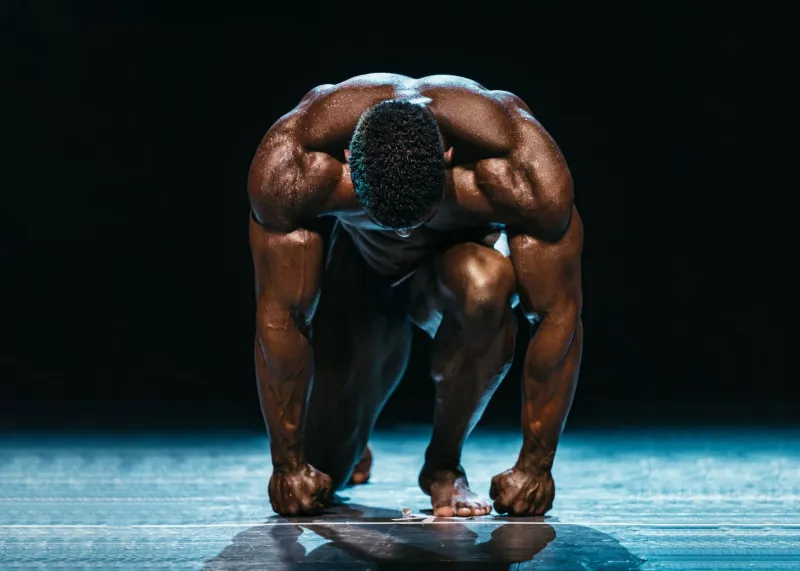
There's a moment at almost every regional American bodybuilding show where you notice the same pattern playing out. The guy who dominated the under-25 class three years ago is nowhere to be seen. Burned out. Injured. Done. Meanwhile, the Turkish-trained competitor in the masters division is stepping onstage looking like he figured out something everyone else missed — because he did.
Turkish bodybuilding culture doesn't produce flash-in-the-pan phenoms the way the American system tends to. It produces athletes who are still competing — and still winning — well into their forties. That's not a coincidence. It's the result of a deeply embedded philosophy that most American lifters have never even considered, let alone adopted.
The American Sprint vs. the Turkish Marathon
Let's be honest about how most American competitors approach their careers. They find a system that works, they push it as hard as they can, and they expect results on a timeline that matches their ambition rather than their biology. There's an entire industry built around that mentality — fast contest preps, aggressive bulk cycles, supplement stacks designed to accelerate everything.
The problem isn't effort. American athletes work incredibly hard. The problem is the underlying assumption that more input always equals more output, and that peaking faster is inherently better than peaking smarter.
Turkish athletic culture operates from a completely different premise. The Turkish concept of sabır — patience — isn't just a personality trait. It functions as a training philosophy. When Turkish coaches talk about an athlete's development, they're not thinking in 12-week blocks. They're thinking in years, sometimes decades. The question isn't "how do we get you stage-ready by October?" The question is "how do we build you into someone who can compete at the highest level for the next 20 years?"
That reframing changes everything.
Why Peaking Later Actually Means Peaking Better
Here's the physiological reality that the American fitness media rarely discusses: the human body, particularly in response to resistance training, doesn't reach its full adaptive ceiling in the early twenties. Muscle fiber density, connective tissue integrity, neuromuscular efficiency, hormonal regulation — all of these systems continue developing and refining well into the mid-to-late thirties when managed correctly.
The athletes who flame out early aren't just victims of bad luck. They've often pushed their systems past sustainable thresholds during a developmental window when the body needed conservative loading and careful recovery. They borrowed from their future to pay for their present.
Turkish training methodology, particularly the progressive overload models passed down through generations of coaches in cities like Ankara, Istanbul, and Bursa, treats the early years of an athlete's career almost like infrastructure construction. You don't put weight on the roof before the foundation is solid. That means lighter loads held longer, movement pattern refinement over raw numbers, and a near-religious emphasis on joint health that most American programs treat as an afterthought.
The payoff? When a Turkish-trained athlete hits his late thirties, his joints aren't screaming. His nervous system isn't fried. His hormonal baseline is intact because he was never chronically overreaching. He's not managing injuries — he's managing performance. And that's when the real gains happen.
The Psychological Infrastructure of Longevity
It's tempting to reduce this conversation to programming differences, but the psychological dimension might actually be more important.
American bodybuilding culture is saturated with urgency. Social media has made that worse. Every platform rewards the dramatic transformation, the rapid reveal, the before-and-after that fits neatly into a 90-day window. There's enormous social pressure to show results fast, and that pressure bleeds directly into how athletes train and prep.
Turkish athletes, particularly those trained under coaches who came up through traditional strength and wrestling communities, tend to have a fundamentally different internal narrative. Progress is expected to be slow. Setbacks are expected to happen. The goal isn't to peak this season — the goal is to still be peaking ten seasons from now.
This isn't passivity. Turkish athletes are fiercely competitive. But their competitive drive is aimed at a longer horizon, which means they're less likely to make the kind of desperate, short-term decisions that wreck careers. They don't crash diet for eight weeks because a show is coming up. They don't add volume when they're already overtrained because they feel behind. They trust the process in a way that's genuinely rare in American gym culture.
Lifestyle Integration: The Factor Nobody Talks About
One of the most underappreciated aspects of Turkish athletic longevity is how seamlessly training integrates into the broader fabric of daily life. This isn't about work-life balance in the corporate sense. It's about the fact that Turkish culture has always maintained traditions — communal meals, regular social activity, structured rest periods, seasonal rhythms — that happen to be extraordinarily supportive of long-term athletic performance.
Regular family meals built around whole foods. A cultural comfort with afternoon rest. Social structures that naturally limit chronic stress. These aren't training protocols. They're just how life is organized. But the cumulative effect on recovery, hormonal health, and psychological resilience is enormous.
American athletes trying to replicate Turkish longevity often focus on the training variables and miss this entirely. They copy the periodization model but ignore the lifestyle context that makes it work. You can't isolate the program from the culture that produced it.
What This Means for American Competitors Right Now
If you're a US-based athlete reading this, you're probably not going to overhaul your entire cultural framework before your next show. But there are concrete adjustments you can make that reflect the Turkish approach to sustainable peak performance.
First, extend your timeline. If you're 24 and training hard, the goal shouldn't be to peak at 27. Build systems that will have you peaking at 37. Every training decision should be filtered through that lens.
Second, treat joint integrity as a primary performance metric, not a secondary concern. Turkish coaches track range of motion, tendon health, and movement quality with the same attention they give to strength numbers. If your elbows hurt every pressing session, that's not something to push through — it's a signal that your foundation needs work.
Third, get comfortable with slower progress cycles. A 12-month bulk that adds 8 pounds of quality muscle is worth far more to your long-term career than a 16-week aggressive bulk that adds 20 pounds and wrecks your insulin sensitivity.
The Legacy Play
Turkish bodybuilding culture has a phrase that roughly translates to "the tree that grows slowly bears the strongest fruit." It sounds like a motivational poster, but it's actually a precise description of how elite Turkish athletes approach their careers.
The competitors who are still onstage at 45, still turning heads, still placing — they didn't get there by being more talented than everyone who burned out. They got there by making different choices, consistently, over decades. They played a longer game when everyone around them was sprinting.
That's the patience paradox in action. The athletes who seemed to be falling behind in their twenties ended up ahead of everyone else by the time it actually mattered.
The iron doesn't care how fast you want to get there. It rewards the ones who keep showing up.