Honor the Iron: The Mental Edge Turkish Competitors Carry Into Every Contest
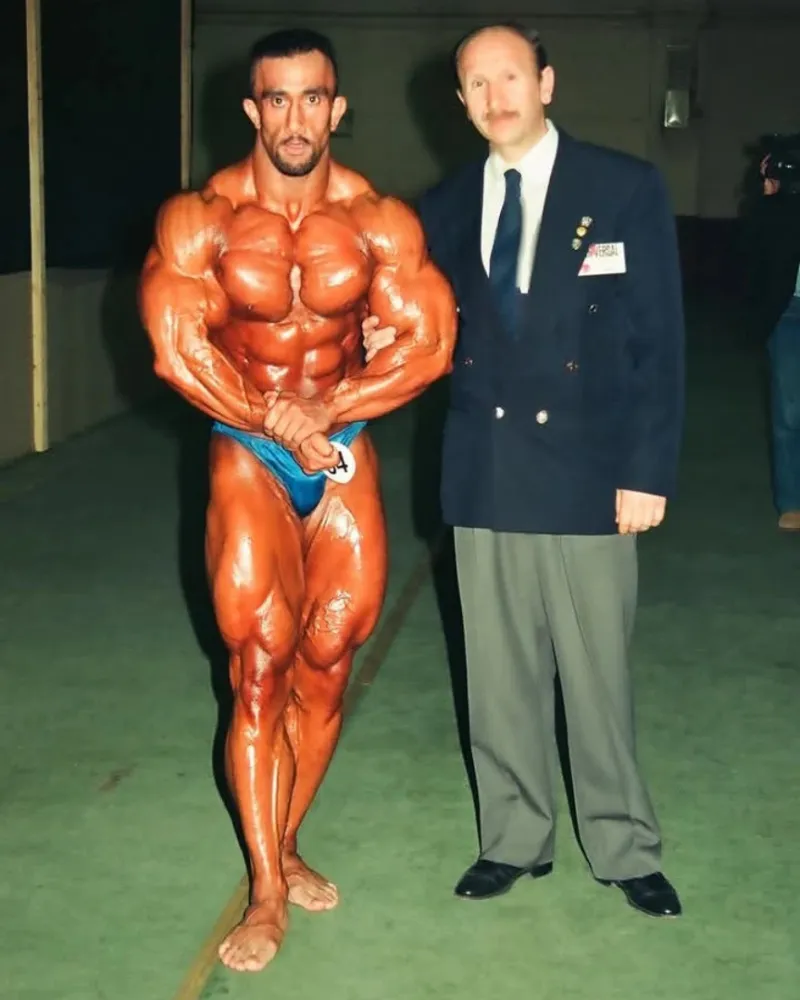
Photo: MuratAydiin, CC BY-SA 4.0, via Wikimedia Commons
More Than a Trophy
Ask a Turkish bodybuilder why they compete, and you'll rarely hear "for myself." That's not because they lack confidence or personal drive — it's almost the opposite. The answer usually involves family. It involves a father who wrestled, an uncle who trained, a hometown that's watching. The "self" in Turkish competitive culture is deeply connected to something larger, and that connection creates a psychological fuel that's genuinely different from what most American athletes are working with.
This isn't just cultural romanticization. Spend time around Turkish and Turkish-American competitors at regional shows in cities like New York, Houston, or Los Angeles, and you start to notice a pattern. These athletes tend to be quieter in the warm-up area. They're not hyping themselves up with headphones and aggression. They're focused in a way that looks almost meditative. And then they step on stage and deliver.
So what's actually going on mentally? And can athletes from any background tap into it?
The Weight of Legacy
Turkey has a deep athletic culture rooted in wrestling — yağlı güreş (oil wrestling) is literally the oldest continuously held sporting event in the world, dating back over 650 years. Strongman traditions, military physical culture, and community sport have been woven into Turkish identity for centuries. When a Turkish athlete steps into competition, they're not just showing up for themselves. They're showing up as a representative of something that goes back a long time.
Athletics coach and former competitive bodybuilder Serkan Doğan, based in Dallas, grew up watching his father and grandfather compete in regional wrestling events in Ankara. "When I'm on stage, I'm not thinking about the judges. I'm thinking about my dad watching from the crowd, or watching from wherever he is now. That's not pressure — that's power. It makes you stand taller. It makes you not flinch."
Western sports psychology often focuses on detaching from external validation and building purely internal motivation. That's valuable. But the Turkish framework doesn't see family and community as external pressure — they're experienced as internal fuel. The distinction matters.
Sabır — The Concept That Wins Championships
There's a Turkish word that keeps coming up when you talk to competitors about how they handle setbacks: sabır. It translates roughly as patience, but it carries more weight than that. It implies endurance with dignity. The willingness to keep working without complaint, without shortcuts, without demanding that results come on your timeline.
For bodybuilders, sabır is a philosophy that directly addresses one of the most common mental traps in the sport: the obsession with immediate results. American gym culture is saturated with before-and-after photos, 12-week transformation challenges, and the constant dopamine hit of visible progress. When progress stalls — and it always does — athletes who've been chasing short-term markers fall apart mentally.
Turkish athletes who've internalized sabır tend to respond to plateaus differently. Doğan describes it this way: "If the scale doesn't move for three weeks, that's not a failure. That's the process. You trust the process because you trust the tradition. People who came before you went through this. You keep going."
That's not passive acceptance — it's disciplined patience. And it's a mental posture that turns a six-month prep into a sustainable, non-anxious experience.
Competition Day: Ritual Over Routine
One of the most striking differences between Turkish-influenced athletes and typical American competitors is how they approach the day of a show. Where many US athletes treat competition day as a performance to be executed — hitting marks, following a checklist — Turkish competitors often describe it in terms closer to ceremony.
There are small rituals that vary by individual: a specific breakfast, a moment of quiet reflection, a prayer or a dedication to a family member. These aren't superstitions. They're anchoring behaviors that connect the athlete to their "why" at the exact moment when nerves and adrenaline are spiking. Sports psychologists call this kind of anchoring extremely effective for managing arousal states before performance. Turkish culture arrived at it organically.
Nuray Aksoy, a women's physique competitor from New Jersey who placed in the top five at a national qualifier last year, says she always takes five minutes alone before she goes backstage. "I think about my grandmother. She raised four kids working twelve-hour days and never complained once. If she could do that, I can walk on a stage. It reframes everything."
Practical Takeaways for American Athletes
You don't have to be Turkish to use any of this. What these athletes are tapping into are universal psychological principles expressed through a specific cultural lens. Here's how to adapt them.
Find your legacy anchor. Who are you competing for beyond yourself? It doesn't have to be dramatic — a parent, a younger sibling, a community you came from. Make that connection conscious and explicit before every competition.
Practice sabır deliberately. When you hit a plateau, resist the urge to immediately change your program or panic. Give your body and mind three weeks of consistent, unchanged effort before drawing conclusions. Trust the process the way the process has earned.
Build pre-competition rituals, not just routines. A routine is mechanical. A ritual carries meaning. The difference is whether you're present for it or just executing steps. Find two or three small actions you do before every competition that connect you to your purpose.
Reframe pressure as representation. Instead of feeling alone under the pressure of competition, feel accompanied. You represent something — your training, your roots, your people. That's not a burden. That's a competitive advantage.
The Iron Doesn't Lie, and Neither Does the Tradition
American bodybuilding has produced some of the greatest physiques in history. The training science, the competitive infrastructure, the supplement industry — all world-class. But the mental side of the sport is where Turkish athletes are quietly running a different playbook, one that's been refined not just over years of training but over generations of cultural identity.
At Bodybuilding Türkiye, we believe iron roots run deep. And when those roots are strong enough, they hold you steady on the biggest stages in the world.