Stop Fighting Your Body: How Turkish Athletes Win by Working With Their Genetics Instead of Against Them
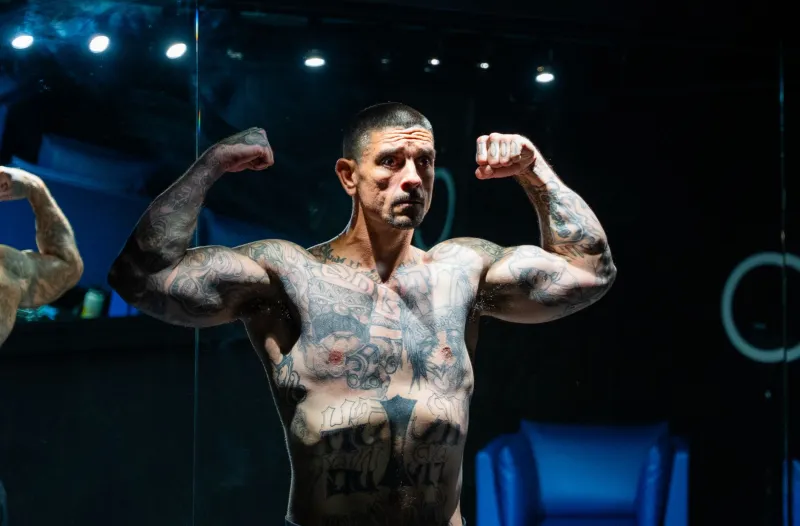
The Conversation American Gyms Keep Avoiding
Walk into almost any commercial gym in the US and you'll find someone doing cable flyes trying to build a chest like Chris Bumstead, or hammering lateral raises hoping to grow shoulders like a guy whose clavicles are naturally six inches wider than theirs. Nobody talks about it out loud, but there's a quiet epidemic of lifters working against their own bodies — and burning years of effort in the process.
Turkish bodybuilding culture doesn't really do that. Not because Turkish athletes don't have aspirations, but because there's a fundamentally different relationship with the concept of blueprint — the idea that your body came with a specific set of strengths, and that the smartest thing you can do is figure out what those are and build from there.
This isn't pessimism. It's not settling. It's strategy.
What "Working With Your Genetics" Actually Means
Let's get specific, because this phrase gets thrown around a lot without much practical weight behind it.
Your genetics determine a handful of things that no training program will ever fully override: muscle belly length and insertion points, bone structure and limb proportions, natural fiber type distribution, and your body's preferred hormonal environment. These aren't minor variables. They're the architectural blueprint of your physique.
Long femurs? Your squat will always look different from someone with shorter legs — and that's not a problem to fix, it's information to use. High bicep insertions? Your arms might never have that full, hanging peak that low-insertion guys develop, but your overall arm thickness and density can be exceptional. Narrow clavicles? Classic Physique might not be your division — but Men's Physique or a well-proportioned Bodybuilding class could be exactly where you shine.
Turkish athletes, particularly those who trained under coaches with roots in traditional strength sports like oil wrestling and weightlifting, tend to get this diagnosis early. Their coaches look at them — really look at them — before writing a single set-and-rep scheme. Limb length gets assessed. Insertion points get noted. Natural muscle shape gets factored into exercise selection from day one.
In the US, that level of individualized analysis is usually reserved for elite-level athletes with high-end coaching. Most lifters are handed a cookie-cutter program and told to grind.
The Cultural Root of This Mindset
There's something worth understanding about how Turkish culture frames individual identity in athletic contexts. Traditional Turkish sports — yağlı güreş (oil wrestling), cirit, weightlifting — were never about everyone looking the same. They were about mastering what you had. A wrestler with shorter arms develops a different grip game than one with long reach. Neither is wrong. Both are optimized.
This philosophy bleeds into how Turkish bodybuilders approach the mirror. The goal isn't to replicate someone else's physique. The goal is to become the best version of the specific body you were given. It sounds almost obvious when you say it out loud, but it runs directly counter to how most Western fitness media operates — which is built almost entirely on the premise that you can look like whoever is on the magazine cover if you just buy the right program.
That's not just a marketing problem. It's a psychological trap that keeps lifters perpetually dissatisfied and chasing an incompatible target.
Practical Strategies for Leveraging Your Blueprint
So how does this actually translate to training decisions? Here are a few ways Turkish athletes operationalize the genetics-first mindset:
Assess before you program. Before committing to a training block, spend real time understanding your leverage. Film your compound lifts from multiple angles. Notice where your muscles are naturally thickest. Identify which exercises produce the strongest mind-muscle connection without mechanical compensation. That data is more valuable than any generic program.
Let insertion points guide exercise selection. If your lats insert high and your torso is short, you'll likely respond better to wide-grip pulldowns and pull-ups than to heavy barbell rows. If your quads have long bellies that run close to the knee, leg extensions might build more visible sweep than hack squats. Stop fighting the anatomy — use it.
Choose your division based on your structure, not your inspiration. This is a big one for competitive athletes. Turkish coaches are often blunt about this in a way American coaches sometimes aren't — if your bone structure and natural muscle shape don't align with the judging criteria of a particular division, no amount of dieting or training will fully close that gap. Pick the division where your genetics are an asset, not a liability.
Stop measuring progress against other people's bodies. This is easier said than done in the social media era, but it's genuinely transformative when you commit to it. Your benchmark is your previous self — your proportions, your conditioning, your stage presence. Another lifter's physique is irrelevant data.
What American Lifters Stand to Gain
The US fitness market is enormous, and with that size comes a lot of noise — influencers, cookie-cutter programs, one-size-fits-all supplement stacks, and a near-constant stream of "ideal physique" imagery that shifts every few years. It's genuinely hard to find your own signal in all that.
But the athletes who make the most sustained progress — the ones who are still competing and improving a decade in — are almost always the ones who figured out their personal blueprint early and stopped trying to override it.
Turkish competitors who've made the move to American shows often talk about this as one of their biggest adjustments: not adapting their training, but watching American athletes exhaust themselves chasing physiques their bodies simply weren't designed to build. The frustration is visible. The wasted years are real.
The alternative isn't lowering your ambitions. It's aiming them more precisely.
Iron Roots Run Deep for a Reason
At Bodybuilding Türkiye, we talk a lot about iron roots — the idea that the strongest structures grow from what's already in the ground. Your genetics are your roots. They're not a ceiling. They're a foundation.
The lifters who fight their blueprint spend their careers building on sand. The ones who understand it, own it, and train accordingly? They build something that actually lasts.
Figure out what your body does well. Build a program around that. Pick a division that rewards it. And stop spending your best training years trying to become someone your DNA never intended you to be.
That's not a Turkish secret. It's just common sense — and somehow, it's still the most radical advice in the room.